
The problem is rarely how it looks.
Most business websites fail for reasons that have nothing to do with taste. The message does not match what the buyer is trying to decide. The site is slow on a phone. The structure fights search engines instead of helping them. There is no obvious next step, or there are six competing ones. We start with the decision your customer is making and design backward from it.
What we build
- Strategy and information architecture
- Message and offer hierarchy, page by page
- SEO safe migration with a validated redirect map
- Mobile first responsive design
- Accessibility to WCAG 2.2 AA practices
- Performance work aimed at real Core Web Vitals thresholds
- Technical SEO foundation, structured data, and clean semantic markup
- WordPress or another maintainable CMS you can actually edit
- Analytics, conversion tracking, and event validation
- Forms, calls, scheduling, and CRM integration
- Launch QA and post launch monitoring
Will a redesign hurt your SEO?
It can, and it frequently does, usually for the same three reasons: URLs change without redirects, content that was ranking gets cut, and the new site is slower than the old one. We map every existing URL before design starts, protect the pages that are earning, and crawl staging before launch. That is why migration planning appears in our process before visual design. Read our website migration SEO guide for the checks behind a safer launch.
How a project runs
What it costs
A single page or a focused conversion system.
A focused site for a service business. Where most projects land.
Multi location, ecommerce, or heavy integration. And up.
Ongoing optimization is optional and priced separately. The largest cost variable is usually not page count, it is how much strategy, copy, and photography has to be created rather than supplied.
Recent work
Three recent builds, all live.
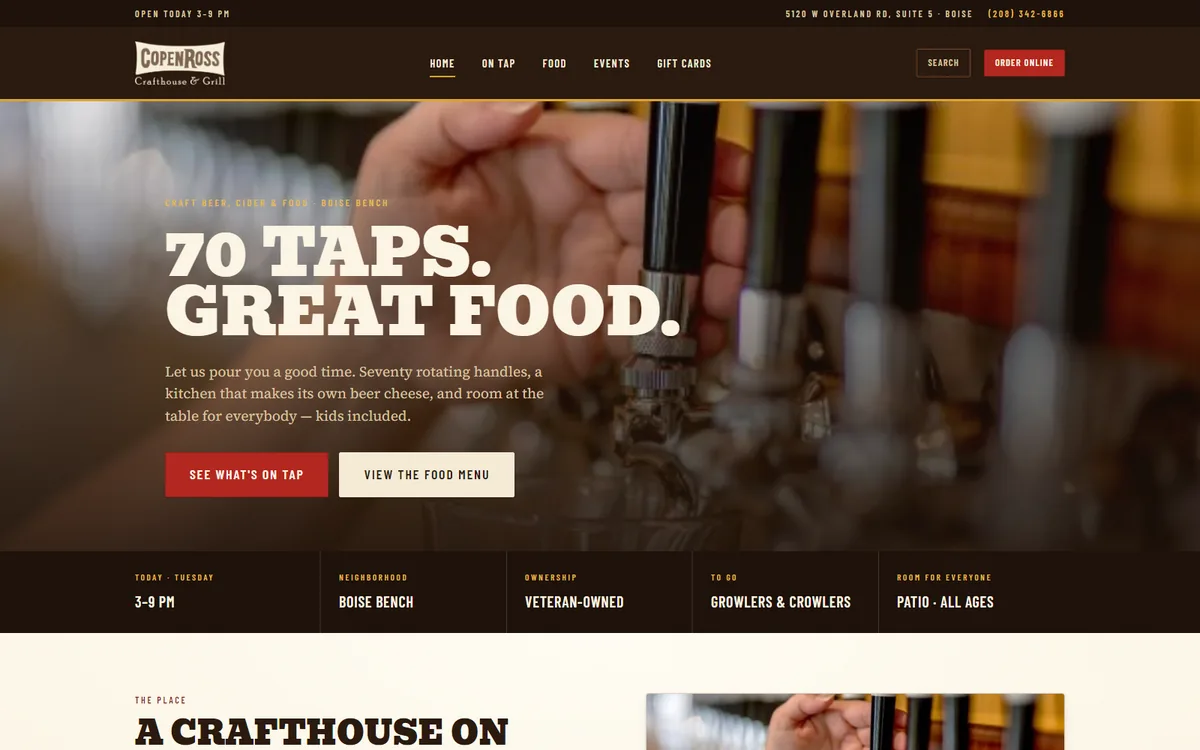
CopenRoss Crafthouse and Grill
Seventy taps. A kitchen that makes its own beer cheese. A veteran owned room on the Boise Bench where the patio fills up and nobody minds that you brought the kids.
Not a brewery. Not a sports bar.
Something better, and harder to explain in a search result. So we built a site that does the explaining. It opens on what is actually pouring, updating itself from the tap board rather than waiting on somebody to retype seventy beers.
It puts the food, the patio, the growler fills, and the all ages policy where people can see them in three seconds. It gives the veteran ownership real space instead of a line in a footer. Craft beer is a crowded category in Boise. The site was built to make CopenRoss unmistakable in it.
- Five page site on a design system built for the brand
- Live tap board, seventy handles, pulling straight from Untappd
- Food, events, gift cards, and ordering all one tap from anywhere
- Events on their own pages so each one can be found on its own
- The visit facts people check first: hours, patio, parking, all ages, growlers and crowlers
- Veteran owned story told properly
Seventy taps that change constantly, a kitchen worth driving for, and a room that welcomes everybody. The site had to move as fast as the tap list does.
True North Equine Land and Ranch
An established agent opening a new specialist division. Ranch, land, and equestrian property is a different business from residential. Different buyers, different questions, different search behavior. It needed a site of its own.
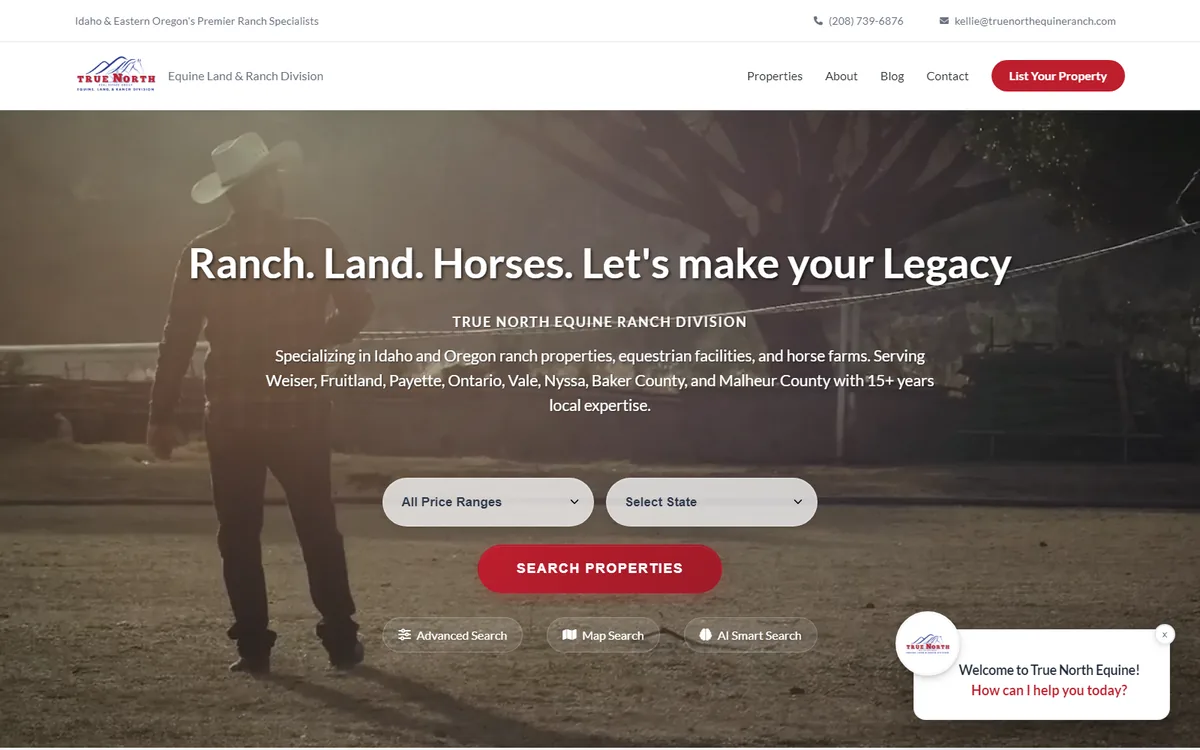
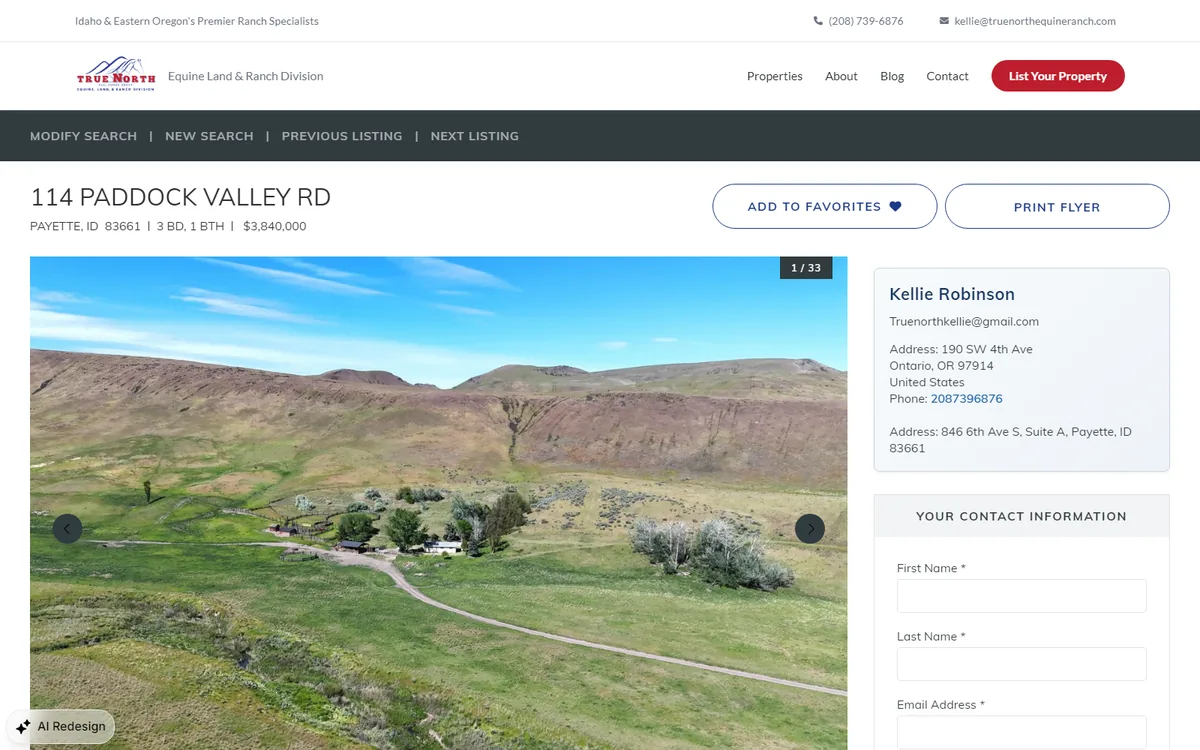
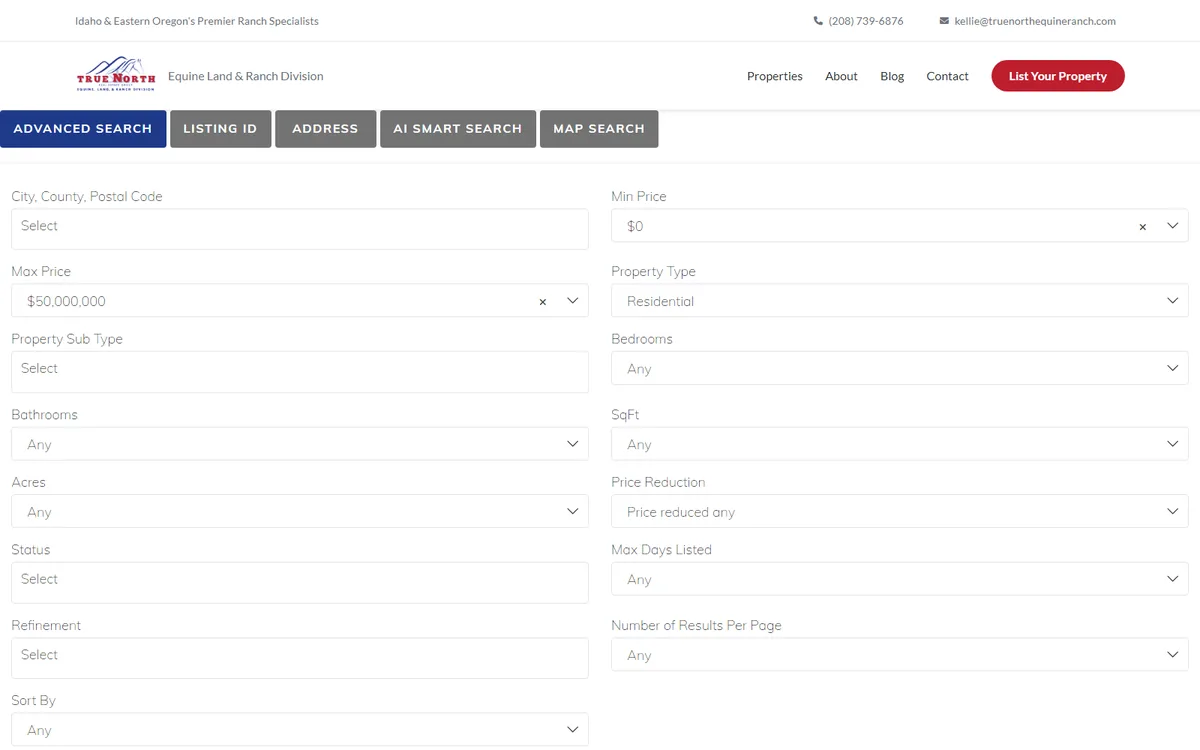
We built it on WordPress with a full MLS integration, so the division launched with genuine listing capability from day one. Buyers can search live inventory by horse, ranch, farm, or land, filter by acreage, and work the map across the whole service area. That is a working property platform, not a brochure pointing somewhere else.
Building it this way costs a fraction of what a comparable hosted real estate platform charges every month, and the division owns the site outright.
- Live MLS results with price, acreage, bedrooms, baths, square footage, and status
- Seventy two horse properties listed at time of capture
- Five search modes: advanced, map, listing ID, address, and AI assisted
- Category landing pages for horse, ranch, farm, and land
- Saved searches and favorites
- An llms.txt file published so AI search systems can read the site structure
A specialist division deserves a specialist site. This one launched with live MLS search, its own domain, and running costs a fraction of a hosted platform.
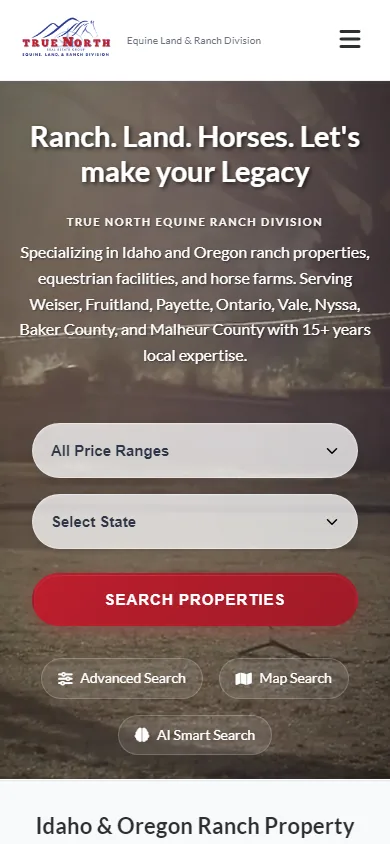
Weiser, Fruitland, Payette, Ontario, Vale, Nyssa, Baker County, Malheur County.

Norco Plastics
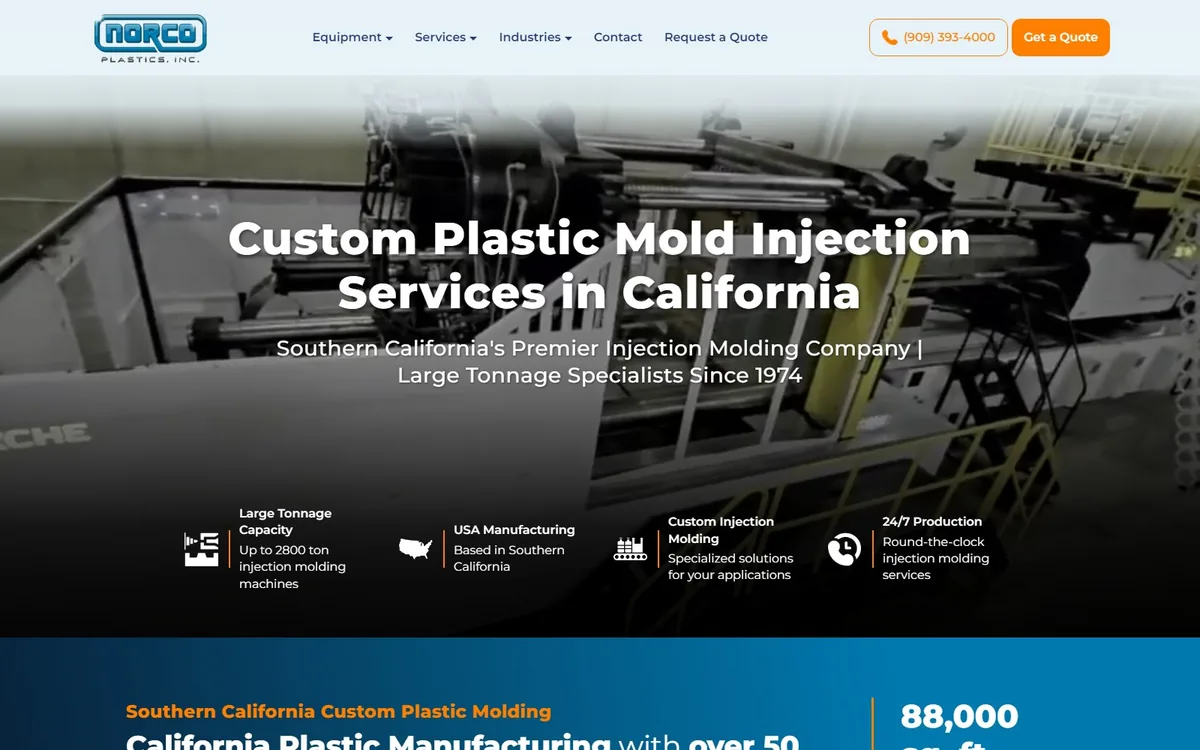
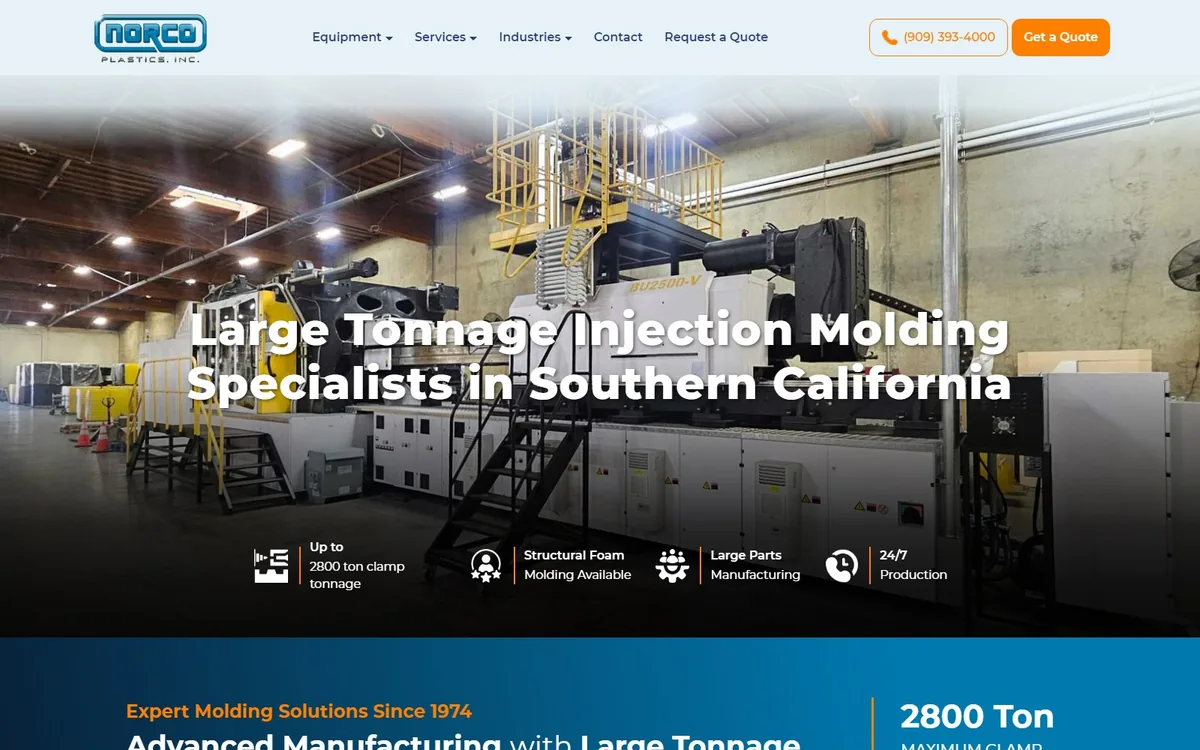
A precision injection molder with fifty years of capability and a website built before anyone thought about how a sourcing engineer finds a molder. Twenty five presses, tolerances to a ten thousandth of an inch, and 103 clicks a month.
We rebuilt it around how manufacturing buyers actually search: equipment, services, industries, and regions each able to rank on their own terms, with the specifications a buyer filters on written where they can check them.
Eleven months on the domain holds 128 organic keywords, sixty one of them new, and the medical components page has climbed into the top ten.
- A structure where equipment, services, and industries each rank on their own terms
- Industry pages, so a medical buyer and an automotive buyer each land somewhere written for them
- Geographic pages across Southern California, because sourcing engineers search by region
- Capability pages carrying tonnage range, press count, shot capacity, tolerances, and quality systems
- A quote path with a clear route from any page to a request
- Technical foundations that search engines and AI systems can read
Procurement buyers do not shortlist on adjectives. They shortlist on specifications they can check.


Questions we get asked
How much does a Boise website cost?
A focused service business website runs 6,000 to 12,000 dollars. More complex projects, multi location, ecommerce, or heavy integration work, run 12,000 to 25,000 and up. A single landing page or focused conversion system runs 2,500 to 5,000. The largest cost variable is usually not page count, it is how much strategy, copy, and photography has to be created rather than supplied. Template based sites are available locally for 2,000 to 4,000 and are a reasonable choice if you need a presence rather than a lead source.
How long does a business website take to build?
Six to twelve weeks for a typical service business site. Roughly a third of that is discovery, architecture, and copy, before any design happens. The two things that most often extend a timeline are waiting on content from the client and adding pages mid project. Neither is a disaster if it is planned for.
Will a redesign hurt my SEO?
It can, and it commonly does, almost always for the same three reasons. URLs change without redirects, so accumulated authority is thrown away. Content that was quietly ranking gets cut because it looked dated. And the new site is slower than the old one, because the design was approved before anyone measured it. All three are preventable. We map every existing URL before design begins, identify which pages are actually earning, and crawl staging before launch to validate the redirects.
Do you build WordPress websites?
Yes, and it is our default recommendation for most service businesses. It is maintainable, you are not locked into a proprietary platform, and it gives full control over technical SEO and structured data. The failure mode with WordPress is plugin sprawl, where a site accumulates thirty plugins and becomes slow and fragile, so we build lean and document what each dependency is for. If another platform is a better fit for your situation we will say so.
What actually makes a website convert?
Clarity, speed, and a single obvious next step. Specifically: a visitor understands what you do and whether it applies to them within a few seconds, the page loads fast on a phone on a mediocre connection, the reasons to trust you are specific rather than generic, and there is one primary action rather than five competing ones. Most conversion problems are message and structure problems, not button color problems.
Can you improve my existing site instead of replacing it?
Often, yes, and we will tell you honestly which is the better use of your money. If the foundation is sound and the problems are structural, messaging, page structure, speed, conversion paths, a focused improvement project is usually better value than a rebuild. If the site is on an unmaintainable platform, fundamentally slow, or built in a way that fights search engines, patching it costs more over two years than replacing it. The diagnostic answers this question specifically.